Understanding Islamic Inheritance Law: A Complete Guide
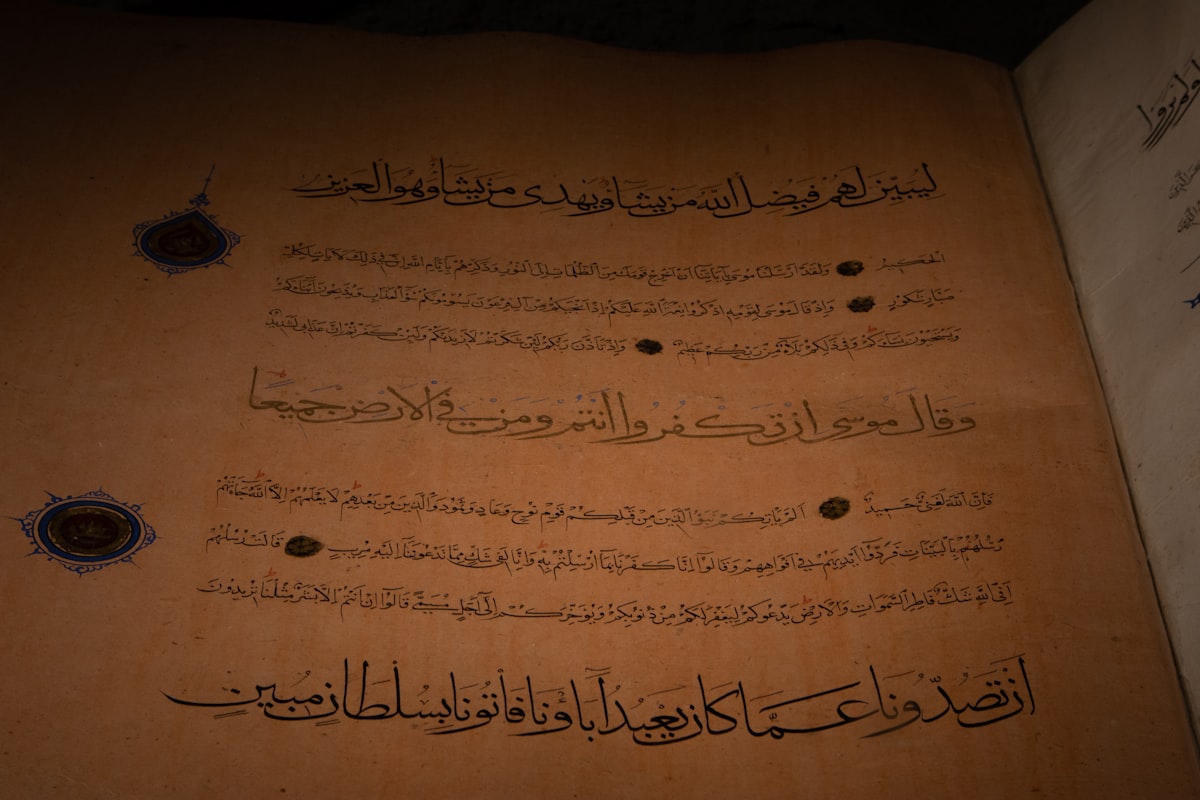
Introduction to Ilm al-Fara'id
Islamic inheritance law, known as Ilm al-Fara'id (the science of obligatory shares), is one of the most precisely defined legal systems ever revealed. Unlike other areas of Islamic law where general principles are given and details are left to scholarly deduction, the rules of inheritance were explicitly and mathematically defined by Allah in the Quran.
لِّلرِّجَالِ نَصِيبٌ مِّمَّا تَرَكَ الْوَالِدَانِ وَالْأَقْرَبُونَ وَلِلنِّسَاءِ نَصِيبٌ مِّمَّا تَرَكَ الْوَالِدَانِ وَالْأَقْرَبُونَ
"For men is a share of what the parents and close relatives leave, and for women is a share of what the parents and close relatives leave, be it little or much — an obligatory share." (Surah An-Nisa 4:7)
The Primary Heirs
In Islamic law, certain relatives can never be completely excluded from inheriting. These are known as the primary heirs (Ashab al-Furud) and include the husband or wife, sons and daughters, and the father and mother. Each has a specific prescribed share (Fard) or inherits the remainder as a residuary heir (Asabah).
Spousal Shares
A husband receives 1/2 of his deceased wife's estate if she leaves no children, reduced to 1/4 if she has children. A wife — or multiple wives sharing equally — receives 1/4 if the deceased husband left no children, and 1/8 if he did. These are among the most clearly stated rules in the entire Quran (4:12).
Children's Shares
When sons and daughters coexist, they inherit as residuary heirs in a 2:1 ratio (a son receives twice a daughter's share). If only daughters survive with no sons, a single daughter receives 1/2 and two or more daughters share 2/3. When sons are present, they convert the daughters' status from fixed-share heirs to residuary heirs.
Debts and Bequests (Wasiyyah)
Before any distribution to heirs can take place, three obligations must be settled from the estate in this specific order:
- Funeral and burial expenses — reasonable costs associated with the burial
- Outstanding debts — all financial obligations including loans, unpaid Mahr, and Zakat
- The Wasiyyah (bequest) — up to a maximum of one-third of the remaining estate, only to non-heirs
Why Every Muslim Needs to Understand Faraid
The Prophet Muhammad (peace be upon him) said: "Learn the laws of inheritance and teach them to the people, for they constitute half of all knowledge, they will be the first to be forgotten, and they will be the first to be taken away from my Ummah." (Ibn Majah). Understanding Faraid is not just a scholarly pursuit — it is a practical obligation for every Muslim who owns wealth.